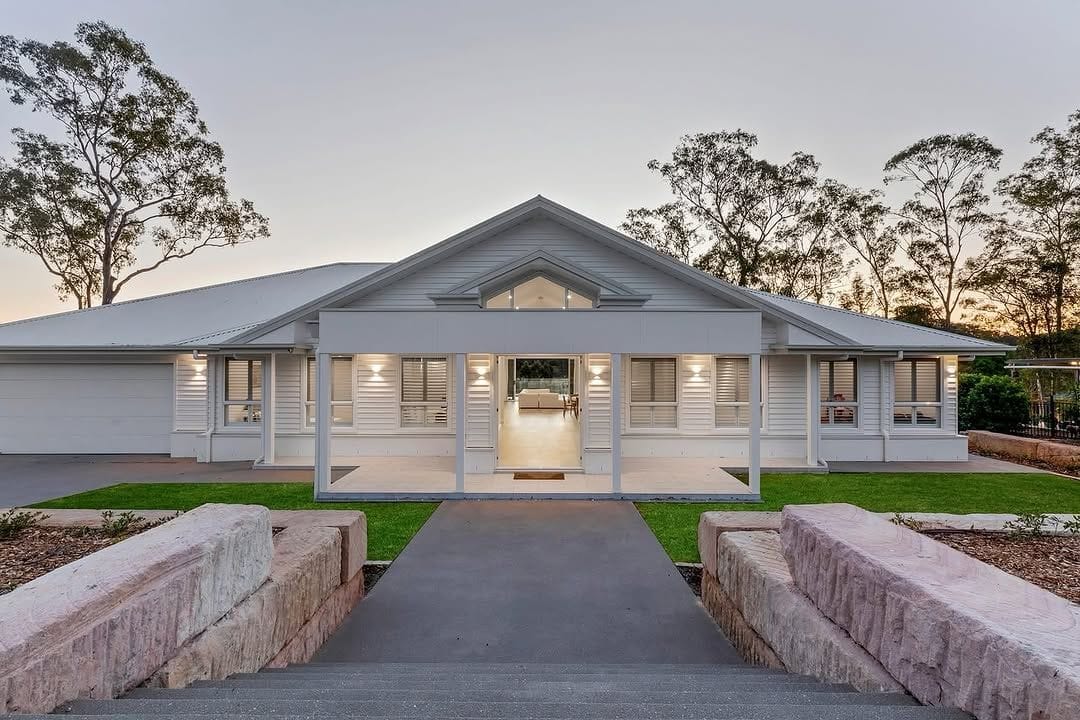
On the coast, paint that should last a decade can fail in a few years. The salt-zone systems, prep and repaint timing that actually hold near water.
- •How close you are to the water changes everything. Band your home by salt zone (beachfront, near-coastal or inland Hunter), because the right paint system and repaint interval are different in each.
- •Coastal painting is a system decision, not a product one. Wash the salt off, prime the bare spots, then apply two full topcoats of a premium salt- and UV-resistant exterior system. Prep, not the brand on the tin, is what makes the job last.
- •A premium, properly prepped coastal system lasts far longer than standard paint near the water. Our coastal work is backed by a 5-year workmanship warranty, so the finish is protected as well as the substrate.
Coastal home painting in 6 steps (the quick version)
Painting a coastal home well comes down to six steps, in order. Get the salt zone, the system, the prep and the timing right and your paint holds; skip any one of them near the water and it fails early. Here is the short version, expanded through the rest of the guide.
- Know your salt zone. How close you are to the water sets everything else.
- Choose a premium salt- and UV-resistant exterior system, not just a tin of paint.
- Prep hard. Wash the salt off and prime every bare spot before a drop of colour goes on.
- Apply two full topcoats at the right sheen for each surface.
- Pick colours that resist heat and UV, especially if you want to go dark.
- Repaint on a coastal schedule, not an inland one.
Why coastal environments are so hard on your paint
Coastal environments attack paint on several fronts at once. Salty air settles on every surface and pulls moisture into the paint film, intense sunlight bleaches colour and breaks down the binder, and humidity drives blistering and mould. Standard hardware-shop paint is not built for that combined load, which is why it fails years early near the water. Getting a coastal paint job to last means understanding each of these coastal elements before you pick a product.
Salt air draws moisture into the film
Salt is the quiet culprit. Salt air, or salt spray on beachfront streets, lands on your walls and draws moisture back in even on a dry day. That constant damp works under the paint film and lifts it, which shows up as peeling paint and flaking, and it corrodes metal fixtures, fascias and fittings from the edges in. Metal surfaces cop it worst, because salt and moisture together start rust the moment the coating is breached.
Harsh sunlight breaks down the binder
UV radiation does the visible damage. Our sun is harsh, and near the coast the glare off water and sand adds to it. Prolonged exposure to that harsh sunlight fades your colour, breaks down the paint’s binder and leaves a fine powder on the surface called chalking (run your hand down a tired coastal wall and you will see it on your palm). Without genuine UV resistance in the paint, exterior surfaces near the water fade and chalk noticeably faster than sheltered inland ones.
Humidity, moisture and mould growth
Humidity, moisture and wind-driven sand finish the job. High humidity and salt near openings feed mould growth and mildew, moisture trapped behind the film causes blistering and bubbling, and wind-blown sand slowly abrades the painted surfaces. Together these show up as the failure modes coastal homeowners know too well: fading, chalking, blistering, peeling paint, flaking, crocodiling (a cracked, scaly surface), mould and rust. If you can see any of those, the coast has already beaten your current paint.
How close to the coast are you? The Newcastle and Lake Macquarie salt zones
Distance from the water is the single biggest factor most guides ignore. A beachfront home and a home a few kilometres inland face very different salt loads, so they need different paint specs, different prep intensity and different repaint intervals. Coastal properties even a few streets apart can sit in different bands, so before you choose a single product, work out which of the three Hunter salt zones your home sits in.
Absolute-coastal (beachfront). Homes right on the water at Merewether, Bar Beach, Redhead and the Swansea heads take the heaviest salt load, direct sea spray and the strongest glare. This zone is the most demanding, needs the most robust system and the most thorough salt wash-down, and repaints most often.
Near-coastal. A few streets back from the water covers much of Newcastle and the Lake Macquarie foreshore. Salt is still a constant factor carried on the sea breeze, just at a lower intensity than the beachfront. A premium system and proper prep still matter; the repaint interval stretches a little further than absolute-coastal.
Inland Hunter. Out toward Maitland, Cessnock and the Hunter Valley, salt is minimal and UV and heat become the dominant stress. The paint still has to fight our sun, but the salt-driven failure modes ease off, and repaint intervals are the longest of the three.
As you move across the bands, four things change: the system spec, the sheen, how hard you prep, and how often you repaint. If your home sits among the coastal homes around Lake Macquarie, treat it as near-coastal at least, and beachfront if the water is in view. We can confirm your zone on a free on-site inspection.
The best exterior paint for coastal homes
The best exterior paint for a coastal home is not a single product, it is a system: a clean surface, the right primer, and two full topcoats of a premium, weather-resistant exterior paint. The system matters far more than any one brand name. For coastal work we build that system from premium 100% acrylic ranges, stepping up to elastomeric coatings where render moves or cracks. Choosing the right paint types up front is what gives the whole job its weather resistance.
Matching paint types to harsh coastal conditions
The ranges we reach for are the premium salt-, UV- and mould-resistant exterior lines: Dulux Weathershield and Haymes Solashield for walls, Taubmans All Weather as a further exterior option, and Wattyl or Intergrain systems for coated and oiled timber. These are the high quality paints built for harsh coastal conditions: 100% acrylic (or elastomeric for masonry that needs to flex), with the UV resistance and mildew resistance that cheaper tins lack, and they carry manufacturer durability guarantees that budget products do not. A genuine quality paint applied as a full system gives superior protection to a single coat of general-purpose paint, which is why we never cut that corner. On the beachfront we lean toward the most robust end of the range and, on exposed metal, anti-corrosive and marine-grade primers.
Sheen is a coastal decision too, not just a look. Higher sheen finishes are tighter and less porous, so they shed salt and moisture better and wash down more easily. As a rule we use a low sheen on broad walls, because it hides surface imperfections, and step up to satin or semi-gloss on trims, doors, window frames and anything that needs regular washing down.
Here is how that maps to the main surfaces on a coastal home.
| Surface | Recommended coastal system | Sheen |
|---|---|---|
| Rendered / masonry | Premium 100% acrylic; elastomeric where the render moves or hairline-cracks (Dulux Weathershield / Haymes Solashield) | Low sheen |
| Fibre cement (Hardie) | Premium 100% acrylic exterior over the correct sealer/primer | Low sheen |
| Timber weatherboard | Flexible acrylic exterior over a bare-timber primer; Wattyl/Intergrain systems for stained or oiled timber | Low sheen walls, satin trims |
| Metal trims / fascia / downpipes | Anti-corrosive metal primer, then acrylic topcoat (marine-grade on heavy exposure) | Satin / semi-gloss |
Protecting metal surfaces on coastal properties
Metal is where coastal paint fails first, so it is worth calling out on its own. Fascias, gutters, downpipes, gates, railings and light fittings are the metal surfaces that rust from the edges in once salt finds a nick in the coating. On any coastal job we sand back rust, treat it, and prime bare spots with an anti-corrosive primer before the topcoat, moving to a marine-grade primer on heavily exposed fixtures. It is a small extra step that professional painters build in as standard, and it saves you replacing corroded metalwork down the track.
Roofs and heavily weathered render are their own specialised job. Where salt is attacking a metal roof or a rendered surface, roof and render coatings use systems built for those substrates. For the walls, doors and trims that make up most of a coastal repaint, our professional exterior painting service covers the full clean, prime and two-coat system.
How often should you repaint a coastal home?
Near the water, repaint sooner than you would inland. A premium, properly prepped coastal system typically lasts around 7 to 10 years, while standard or cheap paint often starts failing in just 3 to 5 years on the coast. Your actual interval depends on your salt zone, your substrate, the aspect that cops the worst sun, and above all the quality of the prep underneath.
The table below is our working guide for the Hunter. It assumes a premium system that has been professionally prepped, including a proper salt wash-down. Skip the prep or drop to a budget paint and you can more than halve these figures.
| Surface | Absolute-coastal (beachfront) | Near-coastal | Inland Hunter |
|---|---|---|---|
| Timber weatherboard | 5-7 years | 7-9 years | 8-10 years |
| Fibre cement (Hardie) | 6-8 years | 8-10 years | 10-12 years |
| Rendered masonry | 7-9 years | 9-11 years | 10-12 years |
| Metal trims / fascia / downpipes | 5-7 years | 7-9 years | 8-10 years |
Two homes on the same street can still land at different ends of these ranges. A wall that cops the full afternoon sun weathers faster than a sheltered south side, a home in a salt-spray pocket ages faster than one screened by other houses, and a job with meticulous prep outlasts a rushed one every time. For a full breakdown of timing across every surface, see our guide on how often you should repaint your home in the Hunter.
Prep is what actually makes coastal paint last
If there is one thing to take from this guide, it is that prep, not the brand on the tin, is what makes coastal paint last. The best paint in the country will peel within a year if it goes over salt, damp or failing paint. On the coast, treat preparation as the job itself, not a quick step before the painting starts.
Remove salt deposits before you prime
Paint will not bond to a salt-coated surface, and the salt keeps drawing moisture in under the film. Every coastal repaint we do starts with a thorough wash-down, using fresh water and sugar soap to remove salt deposits and grime back to a clean, sound surface. Skipping this leaves invisible salt deposits under the new coat, so it is the most-skipped and most-important part of coastal painting.
Get back to a sound substrate
We scrape and sand any failed or peeling paint back to a stable edge, spot-prime bare timber and any rust-prone metal, treat and kill mould rather than painting over it, then fill and re-caulk gaps around joints, windows and doors so water has nowhere to get in. The aim is to leave every one of the painted surfaces sound before a drop of colour goes on.
Prime properly, then wait for the right conditions
Bare timber, chalky render and rust-prone metal all need the correct primer, and even so-called self-priming paints perform better and last longer over a properly primed surface near the coast. We also pick our window: no painting in salt spray, high humidity or onto a damp wall, because moisture trapped under the film is a guaranteed early failure. For the homeowner’s side of getting ready, see our 5 ways to prepare your home for a repaint.
Choosing coastal colours that last
Light colours are the safer choice near the coast. They reflect UV and heat, run cooler, and hide the fine salt and chalking that shows up between washes, giving you a little extra UV protection into the bargain. Dark colours absorb heat and fade faster under coastal sun, so if you want to go dark, insist on a premium range with UV-resistant pigments built to hold their colour.
The reason light colours hold up is partly the titanium dioxide in the paint, which reflects UV and gives pale colours their staying power and coverage. Deep, saturated colours carry less of that reflective pigment and more tinting colour that the sun can bleach, so they tend to fade and heat-stress sooner. A charcoal render wall that looks striking on the sample can weather harder and run hotter than a mid-tone in the same spot.
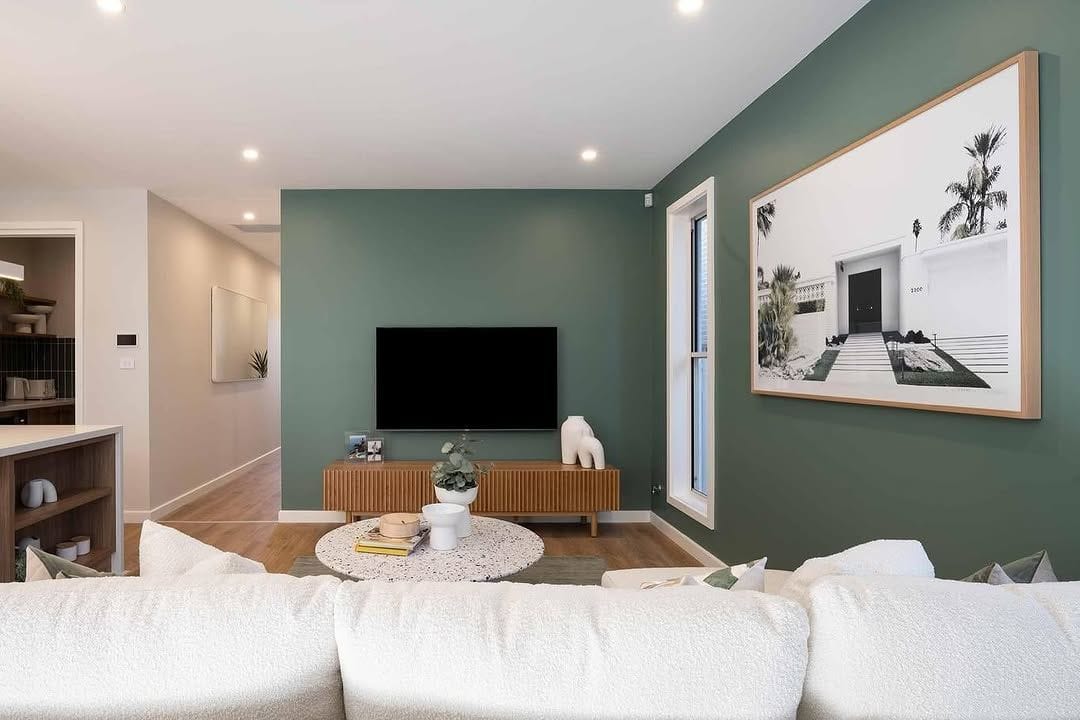
Colour also has to sit with the things you are not changing. Match your Colorbond roof, your masonry or brickwork and the character of the street, and check any estate covenant or heritage overlay before you commit. The soft whites, warm neutrals, sands and muted blue-greens of the classic coastal and Hamptons look are popular near the water for good reason: they hold their aesthetic appeal as they weather, they suit the light, they age gracefully, and they show salt and chalking less than bold or very dark shades.
Coastal interiors: high humidity and mould growth
Coastal living is hard on interiors too, not just the outside walls. High humidity and salt drifting in around windows and doors feed mould growth and can lift interior paint, especially in bathrooms, laundries and living spaces that face the sea breeze. The fix is the same principle as outside: proper prep, mould treatment, and a moisture-resistant interior system in the rooms that cop it, so your coastal interiors stay sound between repaints.
It is worth booking your interior and exterior work together where it makes sense, so the whole home is protected against the same coastal conditions rather than just the front line of it.
When your coastal home needs a specialist (not just any painter)
A coastal home needs a painter who treats it as coastal work, not a standard repaint. The shortcuts that pass inland (skipping the salt wash, using a general-purpose paint, laying down a single coat) fail fast near the water and cost you a full repaint years early. A coastal specialist gets the system, the prep and the salt zone right the first time.
Doing it properly means matching the right system to your salt zone, washing the chloride off before priming, applying two full topcoats at the correct sheen, and standing behind the result. That is where licensing, insurance and a real workmanship warranty matter. Platinum Painting is licensed (NSW Lic. 459336C), fully insured, and every coastal job we take on is backed by a 5-year workmanship warranty, so the finish is protected, not just promised.
If your paint is chalking, peeling or fading early, the smartest first move is to have someone who paints coastal homes for a living look at it in person. Book a free on-site coastal exterior inspection and we will tell you your salt zone, what your home actually needs, and what it will cost, with no obligation.
Frequently asked questions
What is the best paint for coastal areas? A premium, weather-resistant 100% acrylic exterior system, stepping up to elastomeric on render that moves. Look for salt-, UV- and mould-resistant ranges such as Dulux Weathershield or Haymes Solashield, applied as a full system: clean the surface, prime, then two topcoats rather than relying on the paint alone.
What is the best colour for a coastal house? Light, soft colours generally perform best. Sands, warm whites, soft greys and muted blue-greens reflect UV and heat, run cooler and hide salt and chalking between washes. They also suit coastal light and age gracefully. Darker colours can work, but only in premium ranges with UV-resistant pigments, because they fade faster.
What sheen level is best for coastal paints? Use a low sheen on broad walls to hide imperfections, and step up to satin or semi-gloss on trims, doors and anything you wash down. Higher-sheen finishes are tighter and less porous, so they shed salt and moisture better and clean up more easily, which matters a lot near the water.
How often should you repaint a coastal home? A premium, properly prepped coastal system usually lasts around 7 to 10 years, while standard paint often fails in just 3 to 5 years near the water. The right interval depends on your distance from the coast, your substrate, sun exposure and the quality of the prep. Beachfront homes repaint most often.
Do you still need a primer for coastal painting? Yes. Primer is essential on the coast, especially over bare timber, rust-prone metal and chalky or rendered surfaces. Even paints marketed as self-priming perform better and last longer over a properly primed surface near the water, because primer is what gives the topcoats something sound and stable to bond to.
Will darker colours fade faster on a coastal home? Yes. Dark colours absorb more heat and carry less UV-reflective pigment, so they fade and heat-stress sooner under coastal sun than light colours do. If you want a dark scheme, choose a premium exterior range with UV-resistant pigments and expect to repaint a little more often than you would with a lighter colour.
How do you stop metal fixtures rusting on a coastal home? Salt air rusts metal surfaces from any nick in the coating, so fascias, gutters, downpipes, gates and railings need their own treatment. We sand back rust, treat it, then prime bare metal with an anti-corrosive primer (marine-grade on heavily exposed fixtures) before the topcoat. That extra step is what gives metal on coastal properties superior protection and saves you replacing corroded metalwork later.
Do coastal interiors need special paint? Often, yes. High humidity and salt drifting in around windows and doors can feed mould growth and lift interior paint in bathrooms, laundries and living spaces that face the sea breeze. A moisture- and mildew-resistant interior system, over proper prep and mould treatment, keeps coastal interiors sound between repaints.
Ready to protect your coastal home?
A coastal home rewards doing it properly once. Get the salt zone, the system and the prep right and you buy years of a finish that still looks the part, instead of watching it chalk and peel before its time. If you would like to know exactly what your home needs, book a free on-site inspection with Platinum Painting & Maintenance. We are licensed, insured and back our work with a 5-year workmanship warranty, servicing Newcastle, Lake Macquarie, Maitland and the Hunter Valley, from full exterior painting to the coastal homes around Lake Macquarie.

Dean
Founder and lead painter at Platinum Painting & Maintenance, with hands-on experience across homes and businesses right around the Hunter.
Keep reading